LATEST FROM TWITTER
Follow Us

CARNEGIE CORPORATION OF NEW YORK ANNOUNCE DATES FOR THE 2013 CARNEGIE MEDAL OF PHILANTHROPY

 2013 Carnegie Medal of Philanthropy will be held in Scotland:

October 14 – 18, 2013

Pc

Carnegie

2011 Carnegie Medal of Philanthropy Announced 

10th Anniversary of Award Recognizes Individuals,
Families with Exceptional and Sustained Records of Giving  
 

New York, NY: October 14, 2011— The recipients of the 2011 Carnegie Medal of Philanthropy, which recognizes philanthropists who, like Andrew Carnegie, believe in dedicating their private wealth to the public good, were announced today by Carnegie Corporation of New York. They are: the Crown Family; the Danforth Family; Fiona and Stanley Druckenmiller; Li Ka-shing; Fred Kavli; the Lauder Family: Evelyn and Leonard Lauder, Jo Carole and Ronald Lauder; Pamela and Pierre Omidyar; the Pew Family; and the Pritzker Family.

The Carnegie Medal of Philanthropy, now in its 10th year, is awarded every two years to individuals and families in recognition of their exceptional and sustained records of philanthropic giving as well as the important and lasting impact their philanthropy has had on a field, nation, or on the international community.

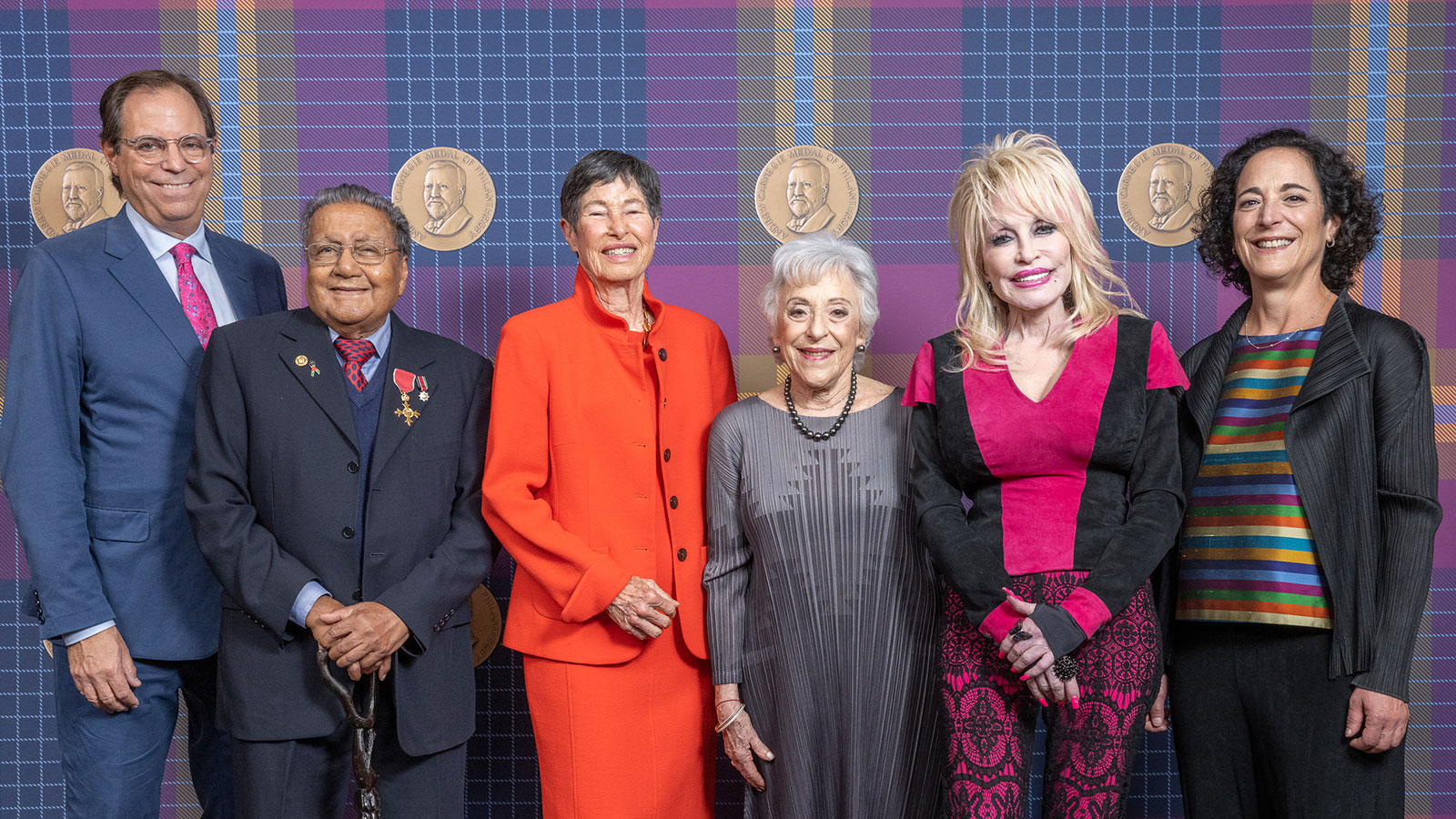
The 2011 winners will receive the medal at an invitation-only ceremony at the New York Public Library on October 20, 2011. The ceremony will be hosted by Judy Woodruff, Senior Correspondent, PBS NewsHour. The philanthropic activities of this year’s Carnegie Medalists span the globe and include pioneering support in education, culture, art, international peace, justice, science, citizenship, research, healthcare, technology, and the environment.

The Carnegie Medal of Philanthropy, the most celebrated award in philanthropy, was established in 2001 to mark the centennial of Andrew Carnegie’s retirement from business and the beginning, in earnest, of his efforts to distribute his fortune in a manner that would, in his words, “do real and permanent good in this world.”

Medal winners are selected by an international selection committee comprising representatives selected from seven major Carnegie institutions. The Medal Selection Committee draws on confidential nominations submitted by a worldwide network of the 23 institutions established by Andrew Carnegie. This year’s selection committee includes Vartan Gregorian, President of Carnegie Corporation of New York, who chairs the committee; William Thomson CBE, great grandson of Andrew Carnegie and Honorary Chair of the Carnegie United Kingdom Trust, who serves as Honorary Chair of the Medal Selection Committee; Andrew Miller, Secretary of the Carnegie Trust for the Universities of Scotland; Jessica Matthews, President of Carnegie Endowment for International Peace; Richard A. Meserve, President of the Carnegie Institution of Science; Joel H. Rosenthal, President of the Carnegie Council for Ethics in International Affairs; and Steven van Hoogstraten, General Director of the Carnegie Foundation (Peace Palace).

“We are honored to bestow the 2011 Carnegie Medal of Philanthropy on truly extraordinary individuals and families who have demonstrated an exemplary, longstanding commitment to philanthropy,” said Mr. Gregorian. “This year’s medalists were selected because their vision of philanthropy reflects the ideals of Andrew Carnegie, who asserted that the rich are ”trustees” of their wealth and are under a moral obligation to reinvest it in society in ways that promote the progress of society.”

Past recipients of the Carnegie Medal of Philanthropy are: 2009 – Mayor Michael Bloomberg, The Koç Family, Gordon and Betty Moore, and Sanford and Joan Weill; 2007 – Eli Broad, the Heinz Family, the Mellon Family, and the Tata Family; 2005 – His Highness the Aga Khan, the Cadbury Family, Tom Farmer, Agnes Gund, the Hewlett Family, and the Packard Family; 2003 – Kazuo Inamori and the Sainsbury Family; and 2001 – Walter and Leonore Annenberg, Brooke Astor, Irene Diamond, the Gates Family, the Rockefeller Family, George Soros, and Ted Turner.

2011 Carnegie Medal of Philanthropy Recipients

The Crown Family
The Crown family began making contributions to those in need over 75 years ago, at a time when they had very little. Today, the family’s philanthropy covers local, national and international Jewish needs, Israel, health and human services, Chicago civic organizations, education, and the environment.

The Danforth Family
From 1927 until its closing in 2011, the Danforth Foundation had several focus areas, including advancing education throughout the United States and working to insure the long-term vitality of the St. Louis region through various capital and institutional improvements. William H. Danforth, M.D., Chancellor Emeritus of Washington University, was instrumental in establishing the Donald Danforth Plant Science Center, developed to improve the human condition through plant science, and John C. Danforth, three-term U.S. Senator from Missouri, who served as Special Envoy for Peace in Sudan, where he focused on ending the country's 20-year civil war, and also served as U.S. Ambassador to the United Nations.

Fiona and Stanley Druckenmiller 
Fiona and Stanley Druckenmiller have funded and run the Druckenmiller Foundation, which primarily supports medical research, education, and the arts. Stanley is Chairman of the Board of the Harlem Children's Zone, and is a Board member of the Children's Scholarship Fund, Memorial Sloan Kettering, and the Environmental Defense Fund; Fiona is a Trustee of Columbia University, the NYU Langone Medical Center, Vice Chair of the Board of Trustees of the American Museum of Natural History, and a board member for The Bloomberg Family Foundation Inc.

Fred Kavli
Fred Kavli, a Norwegian-born U.S. citizen, is a physicist, entrepreneur, business leader, innovator, and philanthropist. Founder of the Kavlico Corporation in Southern California, which became one of the world's largest suppliers of sensors for aeronautic, automotive and industrial applications, Kavli divested his interest in the corporation in 2000 and established The Kavli Foundation, which is dedicated to the goals of advancing science for the benefit of humanity and promoting increased public understanding and support for scientists and their work.

The Lauder Family

Evelyn and Leonard Lauder
Evelyn and Leonard Lauder are leaders in the cultural and charitable life of New York City and beyond, and are the driving forces behind the philanthropic efforts of The Estée Lauder Companies. The Lauders’ renowned generosity has benefited many organizations, including ones devoted to health, education, the environment, women’s causes, and the arts. Evelyn Lauder is Founder and Chairman of The Breast Cancer Research Foundation® and helped to establish the Evelyn H. Lauder Breast Center at Memorial Sloan-Kettering; and Leonard Lauder is Chairman Emeritus of the Whitney Museum of American Art, Co-Founder and Chairman of the Alzheimer’s Drug Discovery Foundation, and a charter trustee of the University of Pennsylvania and Co-Founder of its Joseph H. Lauder Institute of Management and International Studies.

Jo Carole and Ronald Lauder
Ronald and Jo Carole Lauder have shared a lifetime commitment in their philanthropic support of the arts, civic and national causes that stretch from museums to medical research. While Mr. Lauder has focused much of his attention on the Jewish world, where he currently serves as President of the World Jewish Congress, he is also the founder and president of the Neue Gallerie, one of New York’s outstanding museums, as well as the former Chairman, and he is now Chairman Emeritus of the Museum of Modern Art. Jo Carole shares her husband’s passion and has served on numerous committees at MOMA and other museums, and is now the Chairman of FAPE – which works with the State Department to bring American Art to U.S. embassies around the world.

Li Ka-shing
Li Ka-shing, a self-educated entrepreneur who later became the largest manufacturer of plastics in Hong Kong and now chairman of multi-national conglomerate Cheung Kong Holdings and Hutchison Whampoa Limited, established the Li Ka Shing Foundation in 1980. To date, the Foundation has granted over US$1.6 billion to charitable causes throughout the world and remains one of the most well endowed philanthropies with over US$8.3 billion in assets.

Pamela and Pierre Omidyar
eBay founder Pierre Omidyar and his wife Pam have committed more than $1 billion to causes ranging from entrepreneurship to human rights to chronic illness in children. Through the organizations they created – Omidyar Network, Humanity United, HopeLab, and Ulupono Initiative – the Omidyars aim to create lasting social change by providing people around the world with opportunities to improve their lives.

The Pew Family
The sons and daughters of Sun Oil Company founder Joseph N. Pew and his wife Mary Anderson Pew honored their parents more than six decades ago by creating The Pew Charitable Trusts, which is committed to serving the public interest through the power of knowledge. Active around the globe, the institution, which looks to improve policy, stimulate civic life and inform the public, works with diverse partners, including donors, public and private organizations and concerned citizens who share a dedication to research-driven problem-solving and goal-oriented investment to meet some of society’s greatest challenges.

The Pritzker Family
Philanthropy has been at the core of the Pritzer family culture for four generations. The Pritzkers created and sponsored the international Pritzker Architecture Prize and the Pritzker Neuropsychiatric Consortium, with their philanthropic activities in Chicago ranging in areas from health to education and the arts.

About Andrew Carnegie

Born in 1835, Andrew Carnegie became a self-made millionaire. After selling his steel empire at the beginning of the 20th century, he devoted his life to philanthropic work, giving away the bulk of his great fortune. Today, he is widely viewed as the founding father of modern-day, strategic philanthropy.

Carnegie believed that the man who dies rich dies disgraced. He believed that the wealthy were merely stewards of their money—morally required to use it for the good of society. By the time of his death in 1919, Carnegie had been true to his convictions: he had invested some $350 million—nearly all of his fortune—to advance education, science, culture, international peace, and to recognize the heroism of outstanding individuals. More than a century later, 23 not for profit organizations, created by Carnegie’s philanthropy and carrying his name continue his mission the globe over. Andrew Carnegie left a legacy of good will and giving—a legacy evident, in part, in the subsequent generations of philanthropists who, like the 2011 Carnegie Medal of Philanthropy recipients, have followed in his path.

For more information about the Carnegie Medal of Philanthropy, visit: www.carnegiemedals.org; follow on Twitter @carnegiecorp, or search #carnegiemedal or #cmop2011 to follow updates. 

######

Media Contacts:

Suzanne Bronski
Phil & Co.
(646) 490-6446
This e-mail address is being protected from spambots. You need JavaScript enabled to view it.

Katie Murphy
Phil & Co.
(646) 490-6446
This e-mail address is being protected from spambots. You need JavaScript enabled to view it.

2009 Carnegie Medal of Philanthropy Awarded to Michael R. Bloomberg, The Koç Family, Gordon & Betty Moore and Sanford & Joan Weill

New York, New York, October 7, 2009— The 2009 Carnegie Medal of Philanthropy will be awarded to four individuals and families who have dedicated their private wealth to the public good. The 2009 recipients are: Michael R. Bloomberg, the Koç family, Gordon & Betty Moore and Sanford & Joan Weill. The awards are presented on behalf of the more than 20 organizations established thanks to Andrew Carnegie’s munificence.

The Carnegie Medal of Philanthropy was established in 2001 to mark the centennial of Andrew Carnegie’s philanthropy. Medalists are nominated by all the Carnegie organizations throughout the United States and Europe, and selected by a committee comprised of representatives of seven of those institutions.

The Medal is awarded every two years to recognize individuals and families with exceptional and sustained records of philanthropic giving. This year’s medalists have helped establish and support nonprofit organizations in the U.S. and abroad that span the fields of medicine, education, culture, and science. The awardees’ philanthropic records embody Andrew Carnegie’s ideals that with wealth comes responsibility, and private wealth should serve the public good.

“The 2009 Medalists represent a diverse cross-section of philanthropic commitments and geographic locations. Yet, they have a common philosophy of giving,” said Vartan Gregorian, president of Carnegie Corporation of New York and chair of the Medal selection committee. “By celebrating the philanthropic work of these individuals and families, we, the members of the Carnegie family of institutions, seek to highlight the importance of philanthropy in our modern societies. The Medal also gives us an

opportunity to celebrate Andrew Carnegie’s philanthropy and the many contributions of the organizations he founded.”

Andrew Carnegie's philanthropic career began in the 1870s. In "The Gospel of Wealth," which he published in 1889, he outlined his philosophy of giving, which asserted that the rich are "trustees" of their wealth and are under a moral obligation to reinvest it in society in ways that promote the welfare and happiness of the “common man.” Andrew Carnegie believed that one who dies rich dies disgraced, because one did not have the imagination or the foresight to dispose of one’s wealth for the good of society. By the time of his death in 1919, Carnegie had been true to his convictions: he had disposed of his wealth wisely. He invested a minimum of $350 million dollars—nearly all of his fortune—to advance education, science, culture and international peace. More than a century later, more than 20 organizations carry Andrew Carnegie’s name and continue his mission.

The selection committee is chaired by Vartan Gregorian. William Thomson, great grandson of Andrew Carnegie and Honorary Chair of the Carnegie United Kingdom Trust, serves as Honorary Chair of the Medal Selection Committee. The committee’s members are: Andrew Miller, Carnegie Trust for the Universities of Scotland; Richard Meserve, Carnegie Institution for Science; Nora Rundell, Carnegie Dunfermline Trust; David Hillenbrand, Carnegie Museums of Pittsburgh; and, Jessica Mathews, Carnegie Endowment for International Peace.

Leaders from the 22 Carnegie organizations have spent considerable effort to identify and nominate global philanthropic leaders. The Koç family is the seventh international awardee in the medal’s history. Past international medalists include: the Cadbury family, Sir Tom Farmer, His Highness the Aga Khan, Dr. Kazuo Inamori, the Sainsbury family and the Tata Family. (A full list of past Awardees is at bottom.)

The Medals will be conferred Thursday, October 15 at the Celeste Bartos Forum of the The New York Public Library, Stephen A. Schwarzman Building. Bill Moyers, noted author, journalist, and host of Bill Moyers Journal will serve as Master of Ceremonies. The awards ceremony will be the centerpiece of a day-long celebration including a roundtable discussion entitled “Foundations of Modern Philanthropy: Private Wealth to Public Good, 1889-2009” featuring David Nasaw, author of Andrew Carnegie; Patricia Stonesifer, Special Advisor to the Trustees, the Bill & Melinda Gates Foundation; Jean Strouse, Author of Morgan, American Financier; and Peter J. Johnson, Co-Author of The Rockefeller Century and Associate, Rockefeller Family & Associates.

Some highlights of this year’s Medalists include:

Michael R. Bloomberg

The Chronicle of Philanthropy listed New York City Mayor Michael R. Bloomberg as the leading individual living donor in the US in 2008. His $235 million in giving that year is consistent with a pattern over the past decade of steadily increasing donations.

Mr. Bloomberg, New York City’s 108th mayor, has served and contributed to a plethora of organizations promoting public health, medical research, education, arts and culture, and social services. He has been a major donor to Johns Hopkins University, where he served as Chair of the university’s board. Johns Hopkins’s School of Public Health, one of the world’s leading institutions dedicated to the improvement of health and prevention of disease and disability around the world, is named after Mr. Bloomberg.

He is known for funding both tried and true institutions as well as taking risks on less proven programs and smaller organizations. He has brought resources and attention to causes that have long been ignored – focusing on issues that are both specific and solvable, like his groundbreaking programs to reduce tobacco use, improve global road safety, and remove illegal guns from the streets of our cities. Across all of his giving, there is a strong and consistent focus on innovation and a rigorous assessment of data.

Mr. Bloomberg has been an active donor for all of his professional life, having learned philanthropy from his father and mother; his father wrote checks to the NAACP from his modest bookkeeper’s salary.

The Koç Family

The Koç family’s extraordinary legacy in Turkey began more than 80 years ago with the work of patriarch Vehbi Koç, an entrepreneur and humanitarian. The Koç family has contributed to the growth of Turkey through its tremendous sense of obligation to the country, its people and its cultural heritage. The family’s strong sense of duty is reflected in a philosophy that individuals have a responsibility to contribute to the well-being of society. Much of the Koç family’s philanthropy is carried out through the Vehbi Koç Foundation, the first private foundation in Turkey and now one of Europe’s largest.

The family’s philanthropy has sought to improve the quality of Turkey’s healthcare system, to advance the country’s education system and to promote the cultural resources of Turkey. The family also carried out numerous environmental projects through its companies and also by supporting several non-governmental organizations.

The family’s philanthropic giving includes the establishment in 1993 of Koç University, a private, nonprofit institution, located in Istanbul “to serve humanity” by advancing the frontiers of knowledge and by producing the most capable graduates through providing a world-class education.

In addition to the Foundation’s investments, multiple philanthropic initiatives are carried out by the Koç Group of companies. In 2007, the Koç family’s outstanding cultural activities were recognized by the World Monuments Fund through the Hadrian Award.

Rahmi M. Koç will accept the Carnegie Medal on behalf of the family. He is active in a number of philanthropic, social and professional organizations. Vice Chairman of the Board of Trustees of the Vehbi Koç Foundation, Member of the International Advisory Board of the Council on Foreign Relations, Honorary Fellow of the Foreign Policy Association, Honorary Trustee of the Metropolitan Museum of Art are some of his present titles.

Betty and Gordon Moore

In 2000, with a gift worth about $5 billion, Betty and Gordon Moore, founder of Intel and Chairman Emeritus of the Caltech Board of Trustees, established the Gordon and Betty Moore Foundation, with a programmatic focus on three areas: environmental conservation, science, and the San Francisco Bay Area. Betty and Gordon Moore’s philanthropy has an evidence-based focus; the Moores give to institutions and causes they believe can produce "significant and measurable" results.

In that spirit, in 2001, the Moores and their Foundation together awarded $600 million to Caltech, one of the largest gifts ever to an institution of higher education. They said that the gift was to be used to keep Caltech at the forefront of research and technology. This was followed by other major gifts to Caltech and the University of California, which will help the institutions to build the world's largest optical telescope with a mirror 30 meters across, nearly three times the size of the current record holder.

Passionate about improving the quality of health care, it was Betty Moore’s vision and leadership that led the Foundation to approve the 10-year Betty Irene Moore Nursing Initiative in 2003, intended to improve patient safety and outcomes through nurse-led initiatives in acute care hospitals within the five San Francisco Bay Area counties. Recently, the Nursing Initiative was expanded to four counties in Greater Sacramento. 

Joan and Sanford I. Weill

Joan and Sanford I. Weill‘s philanthropy spans more than a half century. During this period, the Weills’ philanthropic giving has totaled more than $800 million, according to BusinessWeek. Major beneficiaries have included New York's Carnegie Hall and Cornell’s Medical College and Graduate School of Medical Sciences, as well as Cornell University’s Weill Bugando Medical Center in Tanzania.

A long-time proponent of the importance of education, the Weills instituted a joint public-private sector partnership with the New York City Board of Education in 1980 that established the Academy of Finance. This school is designed to prepare high school students for careers in financial services, hospitality and tourism, information technology and engineering. Mr. Weill serves as Founder and Chairman of the National Academy Foundation (NAF), which oversees more than 500 career-themed Academies in 40 states, as well as the District of Columbia. In addition to NAF, Mr. Weill gives of his time as chairman of Carnegie Hall and Weill Cornell Medical College. Mrs. Weill is chair of Alvin Ailey American Dance Foundation, where she has been a key organizer of the effort to raise funds and construct in New York City an expanded dance facility, and Paul Smith’s College of the Adirondacks, through which she directed the establishment of a regional digital research library and is involved in the building of the Student Center. Together, Mr. and Mrs. Weill are co-chairs of the White Nights Foundation of America, which is committed to strengthening relationships between Russia and the United States.

Among the many beneficiaries of the Weills’ service and munificence are: Sidra, a 380-bed special teaching hospital to be completed in 2011 in Qatar; New York Presbyterian Hospital; Memorial Sloan-Kettering Cancer Center; The New York Weill Cornell Medical Center’s Women’s Health Symposium, which Mrs. Weill co-chairs; Ford School of Public Policy at the University of Michigan; and Citymeals-On-Wheels.

In addition to their own generous donations, the Weills have helped to leverage many millions of dollars from individuals and corporations for the culture, health, and education causes they hold dear. In celebration of Mr. Weill’s 70th birthday, to give one example of this, the couple raised a record $60 million through their $30 million matching gift for the Weill Music Institute at Carnegie Hall, which promotes music education in classrooms around the world.

Four families honored with Carnegie Medal for 'enlightened giving'

20071018rd medal01_500They were lauded for giving hundreds of millions of dollars for causes ranging from education to the sciences, in places that stretch from Pittsburgh to India.

But the four recipients of the Carnegie Medal of Philanthropy did not take the opportunity to pat themselves on the back yesterday. Rather, Eli Broad and representatives of the Heinz, Mellon and Tata families said they were happy to have helped where they could, and two of the honorees called for others to give, even in increments as small as $25.

This was the first time that the awards named for industrialist and philanthropist Andrew Carnegie were given in Pittsburgh, where he made his fortune. Former NBC newsman Tom Brokaw served as master of ceremonies, and former President Bill Clinton provided videotaped congratulations.

"Never have so many people accumulated such great wealth," Mr. Brokaw said, referring to capitalists around the world. "And with great wealth, of course, comes great moral responsibility."

The public ceremony, wrapping up two days of events, took place at Carnegie Music Hall in Oakland. The awards are held every two years, with past recipients including the Rockefeller and Gates families. Nominations are made by more than 20 organizations bearing the Carnegie name.

Mr. Brokaw praised this year's recipients for their "enlightened giving" and called them "role models" of philanthropy. At least two of the four are no strangers to Pittsburghers, who are daily exposed to buildings and programs bearing the names "Heinz" and "Mellon."

Teresa Heinz accepted the award for the descendants of ketchup magnate H.J. Heinz. The Heinz Endowments and Heinz Family Philanthropies have invested in the arts, the environment, health and education, including the Pittsburgh Public Schools.

In 1995, the family made a $20 million gift to establish the H. John Heinz III Center for Science, Economics and the Environment in Washington, D.C. The center was named for Ms. Heinz's first husband, the U.S. senator who died in a 1991 plane crash.

James R. Mellon II accepted the award for descendants of Andrew W. Mellon, a Pittsburgh industrialist and banker who began his family's tradition of philanthropy more than 70 years ago.

The National Gallery of Art and National Portrait Gallery in Washington, D.C., began with the donation of Andrew Mellon's personal collection. His descendants have supported land conservation, the arts and education through a variety of outlets, including Carnegie Mellon University and the Pittsburgh-based Richard King Mellon Foundation.

James Mellon yesterday recalled Andrew Carnegie's warning that "the man who dies rich dies disgraced," and said he was loath to accept credit for distributing "surplus wealth." Instead, he thanked those who oversee family foundations, saying their professionalism helps to make the most of the Mellon largesse.

With more than $2 billion in assets, the Los Angeles-based Broad Foundations focus on education, the arts and scientific research. Mr. Broad has made urban education a special priority, helping to train superintendents -- including the Pittsburgh Public Schools' Mark Roosevelt -- and providing millions of dollars to troubled school districts for scholarships and other programs.

Ratan Tata, chairman of Tata Sons, based in Mumbai, India, accepted the award for a family that began supporting science, medicine, health, arts and children's programs in the developing country in the 19th century. The former president of India, A. P. J. Abdul Kalam, presented the award.

Mr. Tata reminded the crowd that a "large majority" of men and women "live below the poverty line, particularly in the part of the world I live in." He said his family was pleased to have helped in a "small way" and would continue its efforts.

At a news conference after the awards ceremony, Mr. Tata and Ms. Heinz said a higher percentage of wealthy people around the world should contribute to philanthropic causes. Mr. Tata said the extra assistance was particularly needed in developing countries, and Ms. Heinz said a spirit of giving should be inculcated in young people, even if they can give only $25 at a time.

"There is power in that," she said.

Mr. Broad made a distinction between charity and philanthropy. Instead of waiting for grant applications, he said, his foundations seek out worthy causes and support those likely to give society a return on the investment.

"We see ourselves as venture philanthropists," he said.

Tata wins Andrew Carnegie Medal for philanthropy

NEW DELHI: Ratan Tata on Friday received the Andrew Carnegie Medal of Philanthropy on behalf of the Tata family.

The award is in recognition of the longstanding commitment of the Tata family to philanthropic causes.

The award was presented to Mr Tata by Mr Vartan Gregorian, President of Carnegie Corporation of New York and Chair of the Medal Selection Committee, during the 2007 Carnegie Medal of Philanthropy Ceremony in Pittsburgh. Also present was former President of India, Dr APJ Abdul Kalam.

Carnegie Corporation of New York 2011. All Rights Reserved.